
【Date】: 2018-03-28
"Formosa Satellite No. 5" (FORMOSAT-5) is Taiwan's first self-developed high-resolution optical telemetry satellite. It was launched in August last year and attracted high attention. There are many experts' efforts on this project. Professor Xie Zhi-Cheng and Professor Huang Chao-Zong from the Department of Electrical Engineering of National Tsinghua University also participated in the project. At the beginning of the satellite project, Professor Xie Zhi-Cheng was invited by the Space Center to serve as a technical team member to assist in the development process. Providing professional advice, the laboratory is more involved in the next generation of satellite projects, developing new image-reading wafer technology; after the lifting of FORMOSAT-5, the images were blur due to the focus issue, the space center leverage the image processing expertise of Professor Huang Chao-Zong to assist the FORMOSAT-5 team in solving image blurring problems.
At the beginning of the establishment of FORMOSAT-5 Project, Professor Xie Zhi-Cheng was invited to serve as a technical team member to help review the proposals and technical contents of the contractors of key components (CMOS image sensors). Also, he assisted the implementation process, review and inspection. He provides professional consultation and advice when the development process encounters difficulties, including wafer measurement methods and data analysis methods.
At the same time, Professor Xie Zhi-Cheng's laboratory is also involved in the next generation of satellite development projects. The project will be developed by the China National Academy's wafer center (CIC) to develop CMOS image sensors. Professor Xie Zhi-Cheng's laboratory is entrusted by the wafer center to participate in the project. The company also developed a new reading technology, completed the design and production of prototype wafers, and successfully improved the signal-to-noise ratio and imaging quality of satellite image-taking wafers.
↑校正前(左圖)後(右圖)的美國加州影像(照片來源:國研院太空中心、科技新報)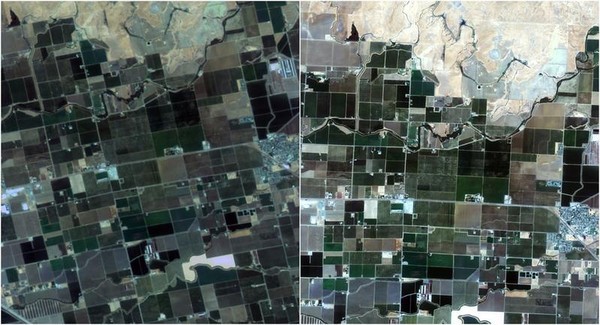
"We electrical engineering reseacher can participate in the space program in such a deep way!" Professor Huang Chao-Zong said very happily. "In fact, many components in the satellite are related to electrical engineering, such as CMOS image sensor (image sensor), image processor. Even this retrospective image processing is all about the field of motors." Due to the fierce competition in international space programs, satellite technology is bound to be a technology that Taiwan focuses on. Professor Huang Chao-Zong has recently contacted the Space Center to invite Fu. Dr. Zhang He-Ben, the chief moderator of FORMOSAT-5 Project, delivered a speech to the NTHU EE Department in May. "Because Taiwan's future satellite program will flourish, it is really necessary for the participation of motor talents."

↑福衛五號拍攝影像拼接而成的台灣全島無雲影像,被稱讚「美翻了」!
(圖片來源:國研院太空中心提供)
Professor Xie Zhi-Cheng is a Doctor of Electrical Engineering trained in Taiwan, his paper studies the design of the readout circuit of infrared image sensor. After retiring, he joined the original CMOS image sensing IC design company - PixArt Imaging Inc., established the mixed signal IC design department, developed the world's first product such as optical mouse and Wii Remote, and assisted PixArt Imaging Inc. to successfully become the first and only listed company in the design industry in Taiwan.
Professor Xie joined the Electrical Engineering Department of National Tsinghua University in August 2007 and established the Signal Sensing and Applications Lab (SiSAL), becoming the only laboratory dedicated to the design and application development of image sensing wafers. A number of research and development results were published in the top conferences and journals in the field of circuit design (ISSCC, VLSI symposia, JSSC), and the two major research axes of CMOS image sensors and analog digital converters, all maintaining the world's first record, including the lowest pressure ( The high dynamic range (137dB) image sensor with 0.32V) operation and the low performance (0.3V) analog digital converter (SAR ADC) with the best performance index (FOMw=0.44fJ/conv.step).
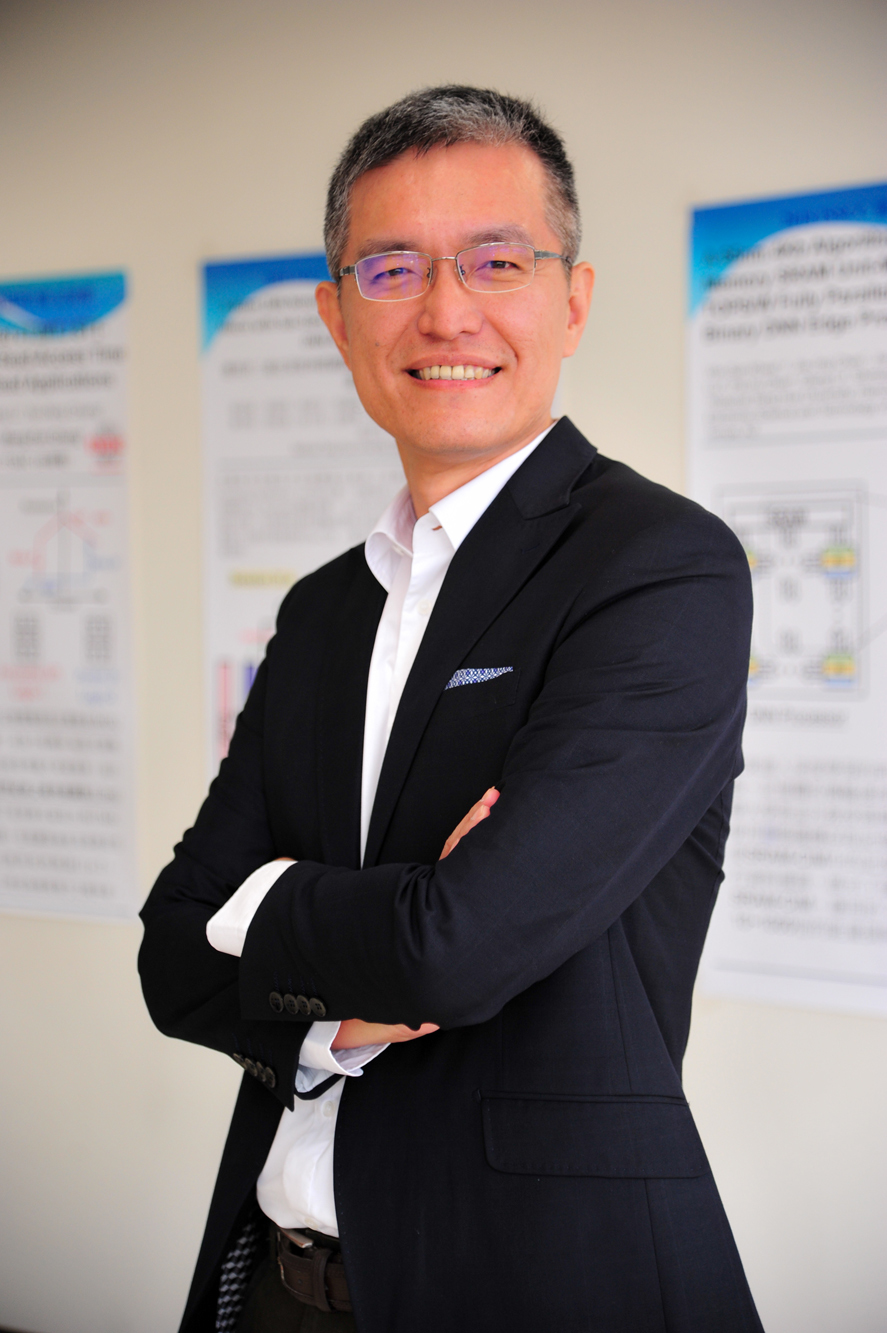
↑謝志成教授受邀太空中心擔任福衛五號技術小組委員,其實驗室也參與下一世代衛星開發計畫,成功提高衛星取像晶片的訊雜比(Signal-to-noise ratio)與成像品質。
Professor Huang Chao-Zong is a Doctor of Electrical Engineering trained in Taiwan. He has six years of video chip design experience in Hsinchu Science Park. He also worked as a postdoctoral researcher at the Massachusetts Institute of Technology. His research interests are based on novel video applications. I hope that it can be used by the Taiwanese industry and take root in the local area. In recent years, the research content has focused on light field image processing, and recently begun to try new topics such as light field display and convolutional neural network processor. Professor Huang's research emphasizes systematic thinking and solid implementation. It not only publishes the results of algorithms such as CVPR and ICCV in the field of computer vision, but also have publishments at the top conference of VLSI and solid state circuit. Published. There are barely researcher can have outstanding accomplishment in both fields.
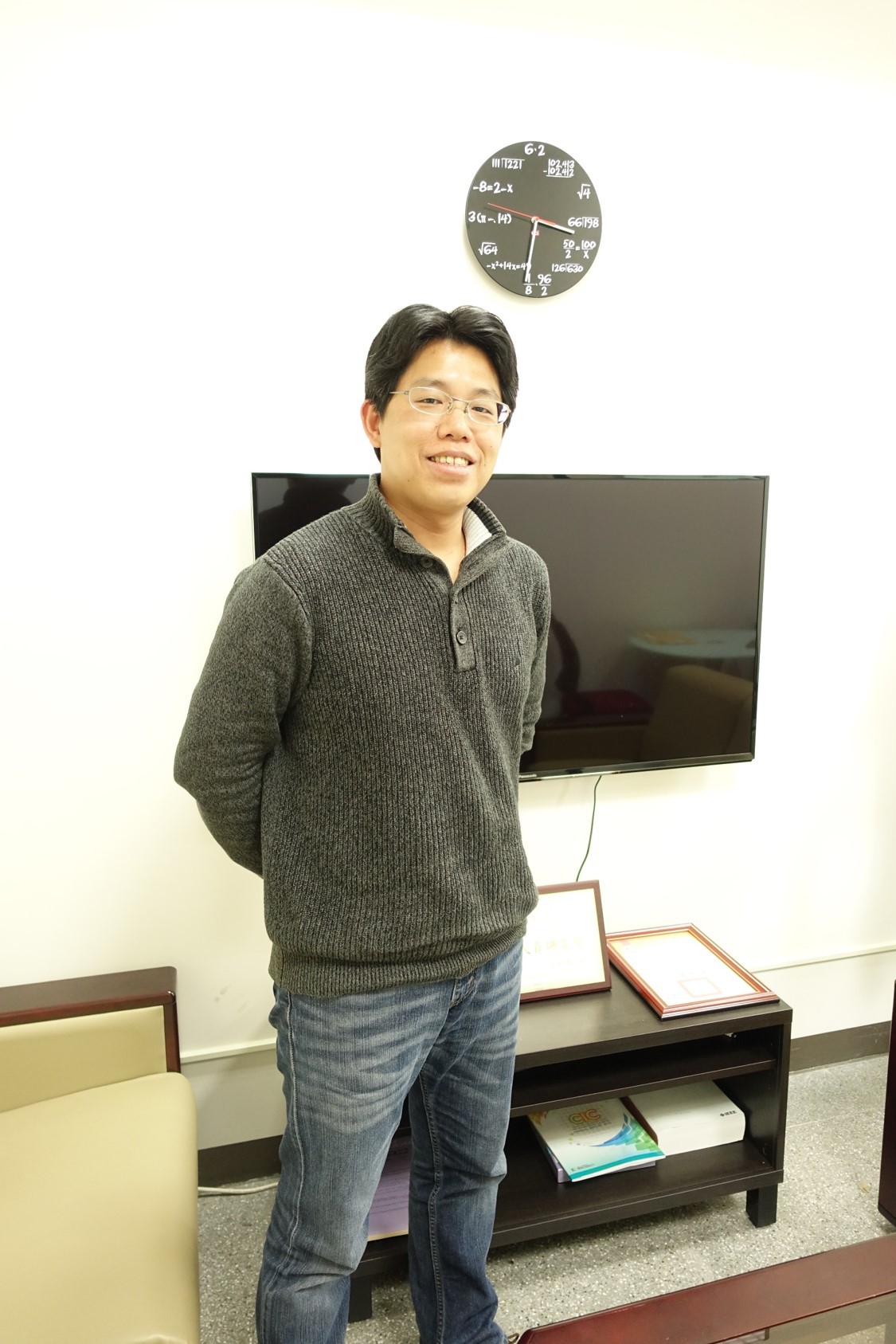
↑黃朝宗教授利用影像處理專長協助福衛五號團隊改善影響解析度與光斑問題,對於能夠利用專長協助太空計畫感到非常高興。
【延伸閱讀】:國家太空中心即時新聞
2018/2/23福爾摩沙衛星五號拍攝台灣全島影像收藏版下載網址