
【Date】: 2018-3-20
The human chess king is defeated by the Alphago, the self-driving car is about to replace the drivers, and the AI artificial intelligence and machine intelligence are now changing our world! In order to face the new AI, big data and IoT era, National Tsinghua University is not only the main school which Ministry of Science and Technology support to develop AI research and development, but also has strong faculty, well-equipped software and hardware environment. The professors implement various AI projects to create a learning environment for future science and technology, and for students to explore, experiment, study and research. The applications include medical, education, psychology, humanities, mechanics, and information. The following is the introduction of the AI implementation plans:
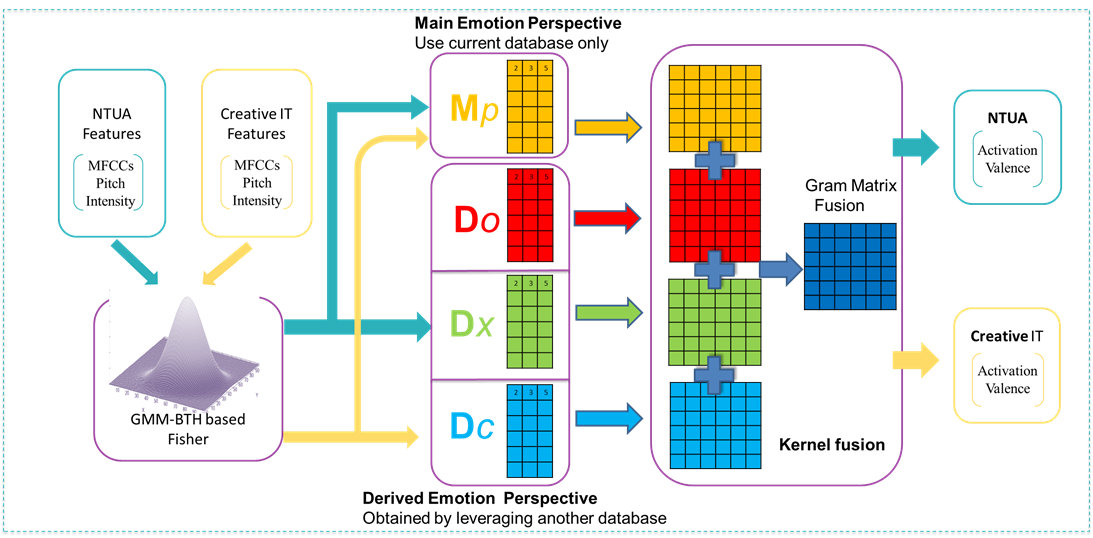
Machine can learn emotion recognition - Cross-language emotion integration promotion model
Nowadays, the development of machine learning and artificial intelligence is getting better and better, and the concept of smart home becomes possible. Emotion is the most important part of letting the machine truly understand people, and emotions are most pronounced in term of voice. Professor Li Qi-Jun's AI project research focuses on multi-lingual emotional models and integrates them as a sound and highly accurate emotion recognition system.
Identifying Autism Disorder through AI by applying face action unit to construct multimodal identification system
In addition, in the past, the evaluation of clinical diagnosis of autism often used physicians to interact with children in a short period of time and record different behaviors of children according to the ADOS (Autism Diagnostic Observation Schedule) scale during the interaction process. This process is not only time-consuming, there are many other uncertain factors, such as subjectivity in assessment.
In order to solve the lack of objectiveness, the computer is a pure "third-party observer" in the designed experiments. The laboratory captures the dynamic expressions of human behavior interactions, encodes the facial Action Unit, and asks the machine to identify. The current application is mainly focused on the emotion recognition system, through the extraction of facial features, the machine learns to model and recognize the facial expressions when human express emotions. The analysis of autistic children through the face expression of the children, grasping the characteristics, and then analyzing whether the child has a tendency to have autism.
Quickly identify the emergency triage and control the golden time of treatment
In addition, machine learning can also be applied to emergency triage classification, speeding up emergency procedures and securing golden medical time. The patient's facial expression is photographed in the emergency room, and the patient's self-reported pain level is given. Through the feature extraction of the facial action unit, the quantitative encoding of the machine learning, the pain level of the patient given, the purpose of the emergency triage classification can be achieved.
.jpg)
Emotional recognition systems used to perform quantitative modeling through facial expressions, sound features, body dynamics, etc., and then identify them. But when people express their emotions, they are not only externally expressed, but the inherent characteristics are also quantifiable and analyzable. The subject feels the emotional stimulation through sound and image stimulation, and the functional nuclear magnetic resonance imaging (fMRI) can immediately reflect the brain response of the subject after stimulation and perform the reaction directly. In this way, the brain information of the emotional stimulation can be quantified, analyzed, modeled, and then the identification of the artificial intelligence machine learning algorithm can directly understand the reaction of emotion in the human brain. In the future, through the combination of multimodality, sound, facial expressions, and the integration of fMRI data, it can simultaneously provide the best response system for the internal and external emotional stimulation of the machine.
Focusing on the global development of artificial intelligence, the Electrical Engineering Department of National Tsinghua University has been actively engaged in research and opening courses in the field of AI in recent years, including deep learning, big data analysis, machine intelligence, high-performance computer computing and IC chip design, and more integration of various types. Professional courses and cross-disciplinary knowledge, such as electrical, electronic, information, mechanical, humanities, psychology, medical, education, etc., and cross-border cooperation, which make Electric Engineering Department the core of the AI research institute in the whole Taiwan. Electric Engineering Department has achieved a leading position in academic and industry-university cooperation. It has spared no effort to cultivate Taiwan's scientific and technological talents, laying a solid and strong scientific and technological strength in Taiwan.
.jpg)